
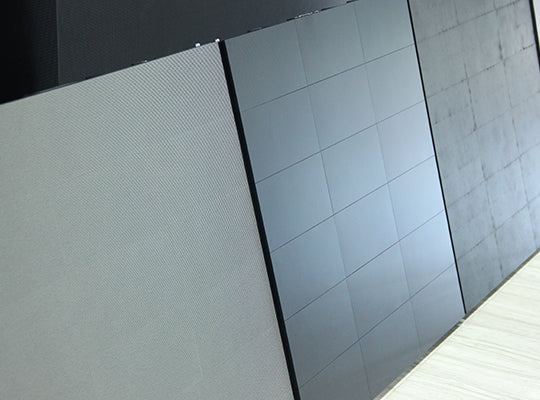
In the competitive landscape of digital out-of-home (DOOH) advertising, the reliability of an LED display is its most valuable currency. While many buyers focus on pixel pitch and brightness nits, seasoned engineers know that the potting glue is what determines if a screen survives 10 years or fails in 10 months. As a Tier-1 LED manufacturer, we believe in total transparency regarding the chemical engineering that goes into every module.
Article Navigation (Quick Jump)
- 1. The Physics of Encapsulation: More Than Just Waterproofing
- 2. Detailed Chemical Analysis: Silicone vs. Epoxy vs. Polyurethane
- 3. Critical Failure Modes: What Happens When Glue Goes Wrong?
- 4. Evaluating Quality: The EEAT Framework for Potting Materials
- 5. Precision Manufacturing: Vacuum De-foaming and Auto-Dispensing
- 6. Strategic Selection: Matching Glue Formulas to Global Climates
- 7. Maintenance and Repairability: The "Soft vs. Hard" Paradox
- 8. Financial Impact: TCO and ROI of Premium Encapsulation
1. The Physics of Encapsulation: More Than Just Waterproofing
Many clients mistakenly view potting glue as a simple "waterproof layer." From a manufacturer’s engineering perspective, it is a multi-functional interface material. Its primary roles include:
- Thermal Conductive Pathway: High-density LED modules generate significant heat. Standard air is a poor conductor. Quality potting glue acts as a bridge, transferring heat from the PCB and ICs to the aluminum housing or heat sinks. According to AVIXA, effective thermal management can double the half-life of an LED lamp.
- Stress Buffering: PCBs expand and contract with temperature shifts. Potting glue with the correct Young's Modulus absorbs this kinetic energy, preventing the gold wire bonds inside the LEDs from snapping.
-
Optical Protection: For outdoor displays, the glue must have a high Refractive Index and anti-yellowing properties to ensure color consistency over a decade.

2. Detailed Chemical Analysis: Silicone vs. Epoxy vs. Polyurethane
Choosing a potting compound is a balancing act between cost, protection, and longevity. We audit our chemical suppliers based on IPC-HDBK-830 guidelines for conformal coatings and potting materials.
A. Organic Silicone (The Premium Industry Standard)
Organic silicone is the "gold standard" for our high-end outdoor series. Its molecular backbone (Si-O-Si) is exceptionally strong, resisting UV radiation better than any carbon-based polymer. It remains elastic in temperatures as low as -60°C and as high as 200°C. Key Benefit: Zero "chalking" or brittleness over 10 years of sunlight exposure.
B. Epoxy Resin (The Rigid Armor)
Epoxy offers superior mechanical strength and chemical resistance. However, it is inherently rigid. In the manufacturing process, if the Glass Transition Temperature (Tg) of the epoxy is reached during a summer heatwave, it can become brittle and crack. We typically limit epoxy usage to indoor modules or low-power industrial indicators.
C. Polyurethane (PU) (The Value Champion)
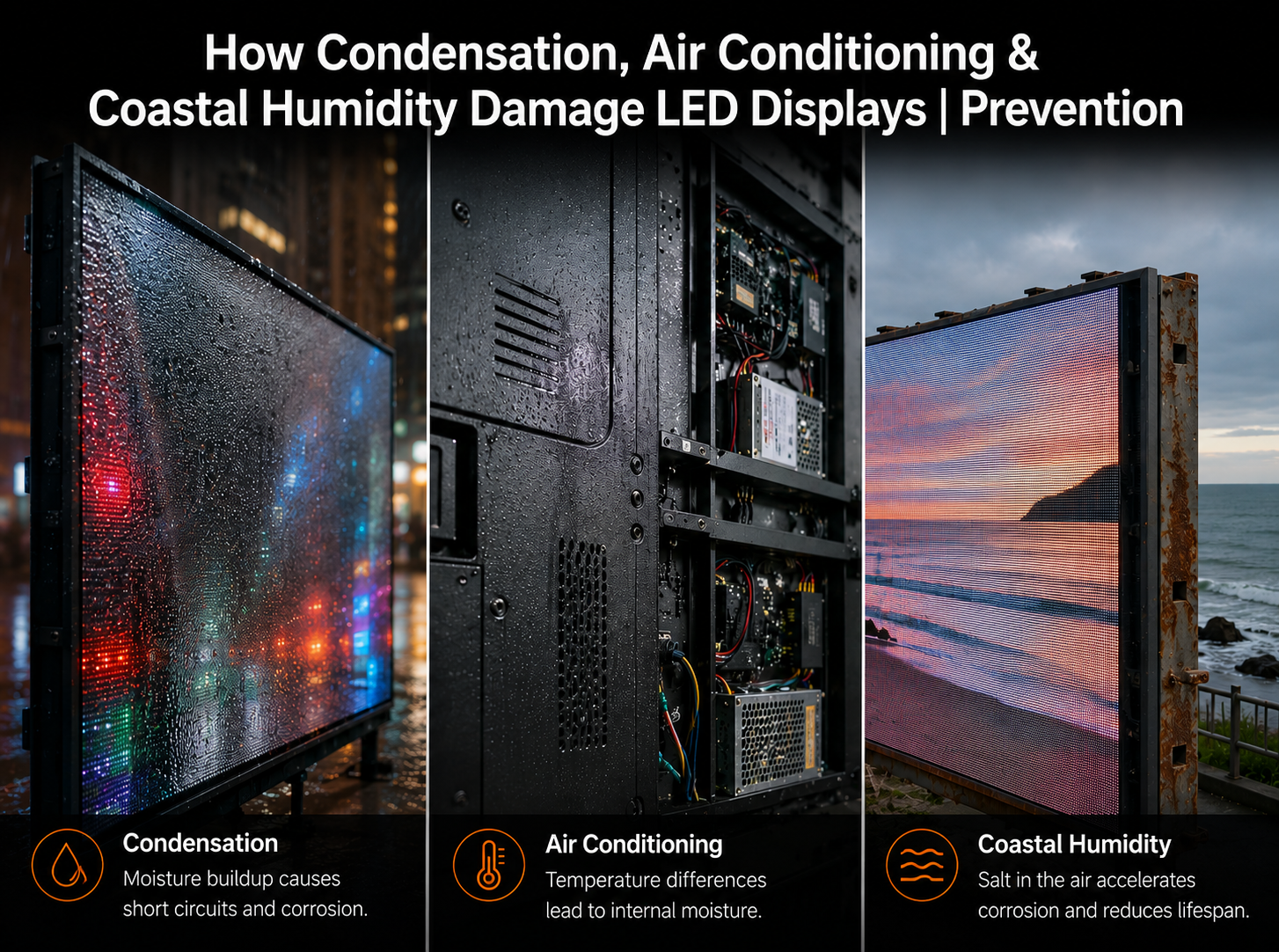
PU provides excellent moisture sealing and is more cost-effective than silicone. Its drawback is its sensitivity to moisture during the curing phase. If a factory's humidity isn't strictly controlled, the PU will undergo a "foaming" reaction, creating micro-bubbles that trap salt-air and lead to corrosion.
3. Critical Failure Modes: What Happens When Glue Goes Wrong?
As a factory, we perform "Root Cause Analysis" (RCA) on failed modules from competitors to improve our own designs. The most common issues found in "cheap" modules are:
2. Oil Bleeding: Inferior silicone glues use paraffin oil as a filler. This oil can seep into the LED lamp lens, causing a permanent "blurred" or "dimmed" effect on pixels.
3. Solder Joint Fatigue: Rigid glues with high shrinkage rates pull on the LED pins, leading to intermittent signal failures (flickering).
4. Evaluating Quality: The Framework for Potting Materials
To ensure Trustworthiness, our factory utilizes the following testing matrix for every batch of glue:
| Test Parameter | Industry Standard | Why It Matters |
|---|---|---|
| Flame Retardancy | UL 94-V0 | Ensures the screen will not support combustion in case of an electrical fire. |
| Salt Spray Resistance | ASTM B117 | Crucial for coastal installations (e.g., Miami, Dubai, Hong Kong). |
| Dielectric Strength | IEC 60243 | Prevents high-voltage arcing between PCB traces during humid conditions. |
| Hardness (Shore A) | ISO 868 | Determines the balance between protection and repairability. |
5. Precision Manufacturing: Vacuum De-foaming and Auto-Dispensing
Even the most expensive silicone glue is useless if applied poorly. Our manufacturing floor follows a 4-step precision process:
- Plasma Surface Treatment: We use atmospheric plasma to clean the PCB, increasing surface tension to 72 dynes to ensure 100% adhesion.
- Vacuum Mixing: Glue components are mixed in a vacuum to eliminate micro-bubbles. As noted by NIST, air pockets in potting can cause localized hot spots.
- Multi-Point Auto-Dispensing: Robots ensure the "filling height" is consistent within ±0.1mm. If glue is too thin, it leaks; too thick, and it adds unnecessary weight and thermal resistance.
- Controlled Curing: Modules travel through a temperature-controlled tunnel to ensure cross-linking occurs uniformly.
6. Strategic Selection: Matching Glue Formulas to Global Climates
We do not use a "one-size-fits-all" approach. Our engineers analyze the Köppen Climate Classification for your project site:
- Tropical Regions (High Humidity/Heat): We utilize Addition-Curing Silicone which produces no by-products (like alcohol or acid) during curing, preventing internal corrosion.
- Arid/Desert Regions (High UV/Temp Fluctuations): We use high-refractive-index silicone with UV-blockers to prevent the "yellowing" effect.
-
Arctic/Cold Regions: We select formulas with a very low Glass Transition Temperature to prevent the glue from cracking like glass when hit by snow or ice.

7. Maintenance and Repairability: The "Soft vs. Hard" Paradox
From a factory maintenance perspective, "Soft" is almost always better.
The Soft Glue Advantage: If an LED screen is hit by a rogue football and a few lamps are damaged, our "soft" silicone can be manually peeled back. The technician replaces the SMD lamp and re-pots the small area.
The Hard Glue Nightmare: Hard epoxy often requires a heat gun to remove, which can easily damage the delicate PCB traces or melt neighboring LED plastic housings, turning a $50 repair into a $500 module replacement.
8. Financial Impact: TCO and ROI of Premium Encapsulation
Manufacturer Case Study: The Cost of Cheap Glue
A client purchased a 200sqm outdoor screen from a low-cost vendor using Grade-C PU glue.
Year 1: 5% module failure due to moisture ingress.
Year 2: 15% failure; the glue began to "chalk" and crack.
Result: The client spent $45,000 on labor and spare parts in two years—more than the original "savings" on the purchase price.
Conclusion: Our Premium Silicone solution would have cost only $6,000 more upfront but saved $45,000 in operational expenses.
Partner with a Manufacturer Focused on Longevity
At our factory, we don't just assemble parts; we engineer durability. Every drop of potting glue we use is a commitment to your brand's uptime and reputation. We invite you to tour our laboratory and witness our salt-spray and thermal-shock testing first-hand.
Ready to upgrade your project specifications? Contact our technical team today for a free "Potting Integrity Audit" for your next outdoor display project.


Share:
Light Weight, Heavy Impact: Redefining Global Stages with VENUS Touring Carbon Fiber LED
How the VMX S-Series Redefines Durability for Fine-Pitch Indoor LEDs