Advanced Technical Series on Substrate Integrity for Large Format Displays (LFD)
1. Executive Summary: The Structural Imperative
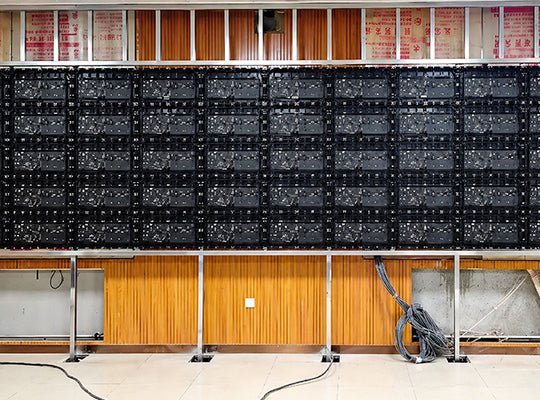
In the contemporary landscape of visual communication technology, the discourse surrounding LED displays—or Large Format Displays (LFD)—is predominantly saturated with electro-optical specifications. Stakeholders often prioritize pixel pitch, refresh rates, and peak luminance. However, an objective engineering perspective reveals that an LED display is first and foremost a complex electro-mechanical system. The structural enclosure, commonly referred to as the "cabinet," acts as the critical bridge between sub-micron semiconductor components and the volatile external physical environment. This white paper provides an exhaustive analysis of the material sciences that undergrid the longevity, safety, and optical fidelity of high-end LED systems. We synthesize metallurgy, thermal dynamics, and international regulatory frameworks into a single technical resource designed for AV consultants, structural architects, and global procurement officers.
2. The Physics of Enclosures: Substrate Mechanics
An LED cabinet must function as a multi-modal protective layer, managing forces that are both internal and external. Failure to understand the underlying physics of these substrates results in premature hardware degradation and increased operational risk.
2.1 Young’s Modulus and Structural Rigidity
Young’s Modulus (E) measures the stiffness of a solid material. In Large Format Display engineering, E-values determine the degree to which a cabinet will deform under a given load. For massive outdoor billboards or ultra-fine pitch indoor cinema screens, maintaining absolute flatness is non-negotiable. If the cabinet substrate exhibits excessive flex, the sub-millimeter alignment between modules will be lost, resulting in visible gaps. We utilize Finite Element Analysis (FEA) to ensure that cabinet designs maintain structural rigidity even when stacked 20 meters high.
2.2 Coefficient of Thermal Expansion (CTE) Coordination
Thermal expansion is the tendency of matter to change in shape and volume in response to a change in temperature. The CTE must be meticulously matched between the display modules and the cabinet substrate. In an outdoor environment where temperatures fluctuate drastically, physical expansion can exceed 2mm. If expansion rates differ, shear stress is transferred to the solder joints of the LED lamps, leading to "pixel popping" and catastrophic PCB failure over time.
3. Advanced Metallurgy: Comparative Substrate Analysis
| Material Type | Density (g/cm³) | Tensile Strength (MPa) | Thermal Cond. | Precision & Compliance |
|---|---|---|---|---|
| Die-Casting Aluminum (ADC12) | ~2.70 | ~310 | 160 W/m·K | ±0.01mm | ASTM B85 |
| Magnesium Alloy (AZ91D) | ~1.81 | ~230 | 156 W/m·K | ±0.02mm | ISO 16220 |
| Carbon Fiber Composite | ~1.55 | ~3500 (Fiber) | 50 W/m·K | ±0.10mm | ISO 9223 |
| Extruded Aluminum (6063) | ~2.70 | ~215 | 200 W/m·K | ±0.50mm | ASTM B221 |
| Cold-Rolled Steel/Iron | ~7.85 | ~450 | 50 W/m·K | ±1.00mm | ISO 1461 |
3.1 Die-Casting Aluminum (ADC12)
The use of ADC12 aluminum-silicon-copper alloy is the industrial standard for fine-pitch displays. Molten alloy is injected under high pressure into steel molds, ensuring high dimensional stability per ASTM B85. Robotic CNC milling ensures edges are perfectly perpendicular, allowing for seamless visuals at resolutions as fine as P0.7.
3.2 Magnesium Alloy (AZ91D)
Adhering to ISO 16220, magnesium is 33% lighter than aluminum, facilitating much larger configurations within hanging-point limits. Magnesium possesses an exceptionally high damping capacity, absorbing vibrations from high-decibel audio environments to protect internal electronic connections.
4. Mechanical Engineering: Wind Load & Seismic Fatigue
Outdoor LED displays act as massive vertical sails. Structural calculations must follow the ASCE 7-16 standard for design loads. This includes calculating the Drag Coefficient (Cd) and ensuring internal locks possess a safety factor of at least 3:1. In seismic zones, cabinets utilize sacrificial connectors to absorb energy, ensuring the main structure remains intact.
5. Thermodynamics: Heat Sink Efficiency
Heat is the primary cause of LED "color shift" and life reduction. Professional enclosures utilize the "Passive Heat Sink" principle per IEEE 1156.1. Metal cabinets act as a unified heat dissipation plane, ensuring that even in the center of a large display wall, the temperature remains consistent, preventing "hot spots" that cause localized degradation.
6. Corrosion Engineering: Surviving Oxidative Environments
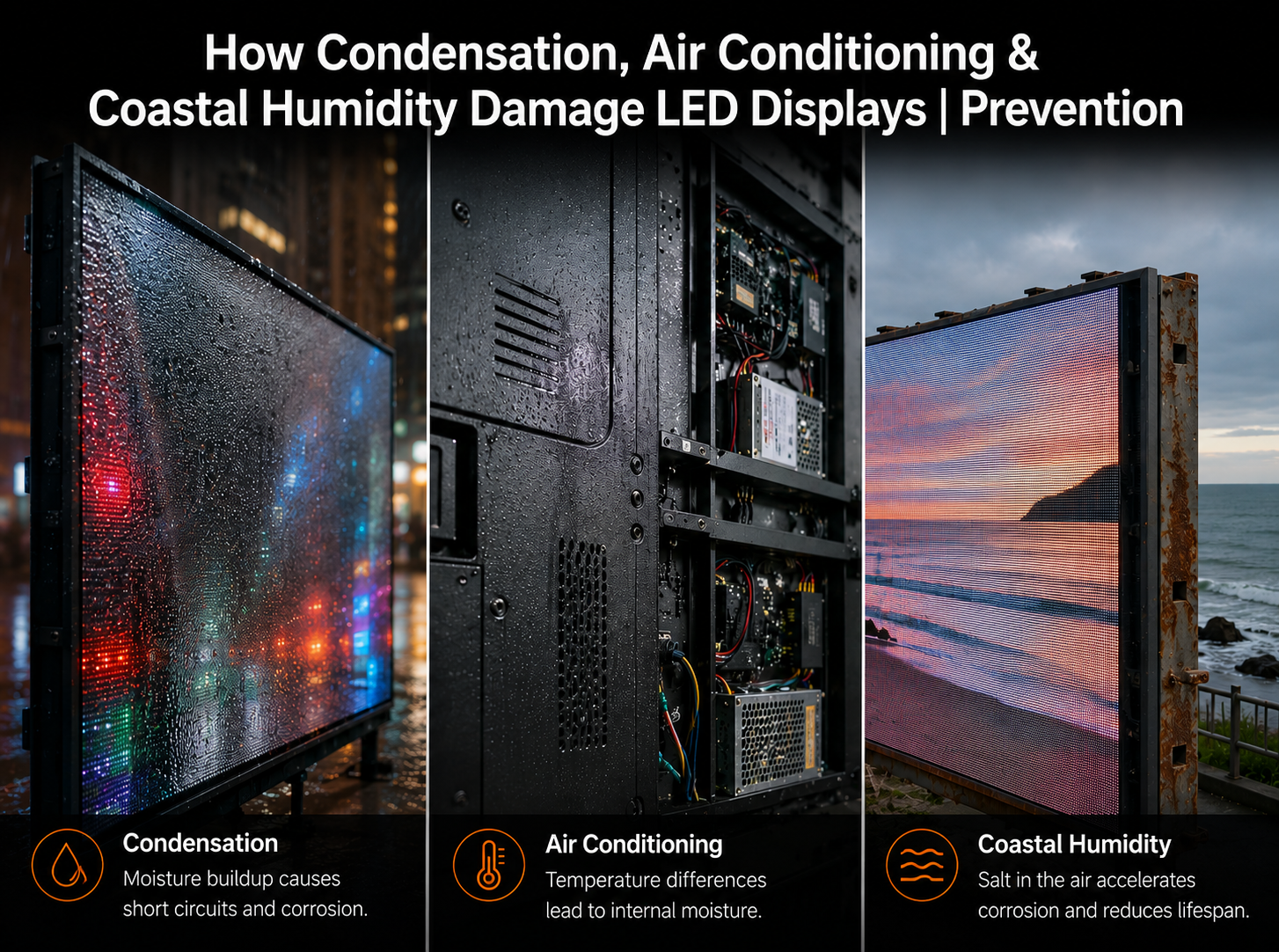
Corrosion is an electrochemical process. Steel enclosures require hot-dip galvanization per ISO 1461. Aluminum and magnesium alloys utilize anodization or UV-stable powder coatings. All materials are subjected to 720 hours of salt spray testing according to ISO 9227 to simulate ten years of coastal exposure.
7. Manufacturing Excellence: CNC Precision & Casting
High-performance cabinets undergo a multi-stage manufacturing workflow. This begins with high-pressure casting to ensure molecular density, followed by T6 heat treatment for hardness, and final 5-axis CNC machining to ensure that connection points and alignment pins meet sub-millimeter tolerances across production batches.
8. Global Regulatory Framework & Safety Compliance
| Regulatory Body | Standard Number | Technical Domain |
|---|---|---|
| IEC (International) | IEC 62368-1 | Safety for Audio/Video/ICT equipment (CE/CB). |
| UL (North America) | UL 48 / UL 1433 | Electric Signs; fire hazard prevention. |
| FCC (USA) | Part 15 Class A/B | Electromagnetic interference limits. |
| European Union | RoHS 2.0 / REACH | Restriction of hazardous heavy metals. |
8.1 Electromagnetic Interference (EMI) Shielding
LED cabinets act as Faraday Cages. High-quality die-casting aluminum and magnesium provide the highest shielding effectiveness, preventing EMI from interfering with Wi-Fi or emergency radio signals, ensuring the display meets "Class A" or "Class B" requirements.
9. Environmental Adaptation: Global Climates
Material selection must be tailored to regional extremes. In high-heat desert climates, alloys with high thermal mass are required to manage ambient temperatures. In polar regions, materials must maintain ductility at -40°C. VMX ensures that every deployment is preceded by environmental simulation to verify material resilience.
10. Economic Logic: Total Cost of Ownership (TCO)
Procurement must focus on the TCO over a 10-year cycle. Magnesium saves up to 4,000kg in freight weight for large projects. Precision-milled cabinets cut labor hours by as much as 40% due to "Plug-and-Play" installation. These factors significantly increase ROI by reducing maintenance downtime and initial deployment costs.
11. Conclusion & Technical Consultation
Cabinet structural integrity is a central engineering imperative. By adhering to international metallurgical and regulatory standards such as ISO, IEC, and UL, we ensure that Large Format Displays remain vibrant and structurally sound assets for the long term. Investing in material science is a commitment to quality that defines the future of professional AV integration.
Engineering Consultation & Global Support
Our technical department provides full-scale support for global integrators.
Whatsapp: +86 158 9978 4734
Email: inquiry@vmxvisual.com
Website: www.vmxvisual.com


Share:
How the VMX Mars Series Achieves 10,000 Nits with Industry-Leading Efficiency
Light Weight, Heavy Impact: Redefining Global Stages with VENUS Touring Carbon Fiber LED