Technical Guide Quick Navigation
01 The Engineering Role of LED Cabinets | 02 Iron Cabinets: Market Dominance & Limitations | 03 Sealed Waterproof vs. Simple Frameworks | 04 Specialized & Abnormal Structures
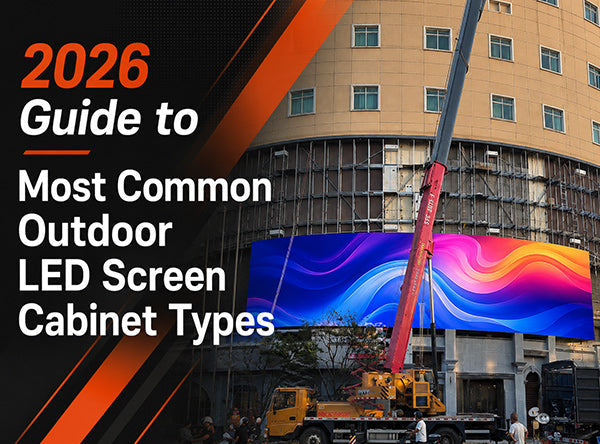
In modern global DOOH (Digital Out-of-Home) networks, commercial hubs, and elite sports stadiums, the massive outdoor LED advertising screens that span dozens or hundreds of square meters are not single, monolithic display panels. Instead, these gigantic digital canvases are engineered by seamlessly interlocking thousands of standardized structural modular units known as LED cabinets. Selecting the correct cabinet configuration is a vital decision that dictates the lifespan, structural integrity, and structural ROI of any commercial outdoor display installation.
The LED cabinet serves as the core physical backbone and foundational protective chassis for the entire display system, playing a multi-faceted role in system longevity. First, it encapsulates and shields highly sensitive internal components—including premium SMD LED diode matrices, complex driving IC printed circuit boards (PCBs), high-density switching power supplies, and industrial receiving cards—from catastrophic environmental factors like physical collisions, fine particulate dust, and atmospheric moisture ingress.

Second, this modular structural design simplifies large-scale hardware logistics. By subdividing a massive screen into lightweight, independent cabinet cells, engineering teams drastically reduce the complexities of overseas freight transport, local crane handling, and high-altitude rigging. Furthermore, it streamlines long-term system maintenance; if a hardware fault occurs, local Pro-AV technicians can troubleshoot, service, or hot-swap individual cabinet units without dismantling the entire display plane, significantly lowering operating expenses (OPEX).
"The physical choice of cabinet architecture impacts not only initial procurement costs but also structural wind-load calculation metrics, safety configurations, and climate-proofing costs under extreme weather cycles." — VMX Structural Design Team.
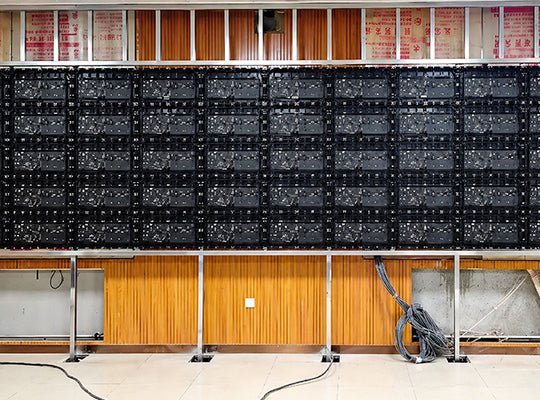
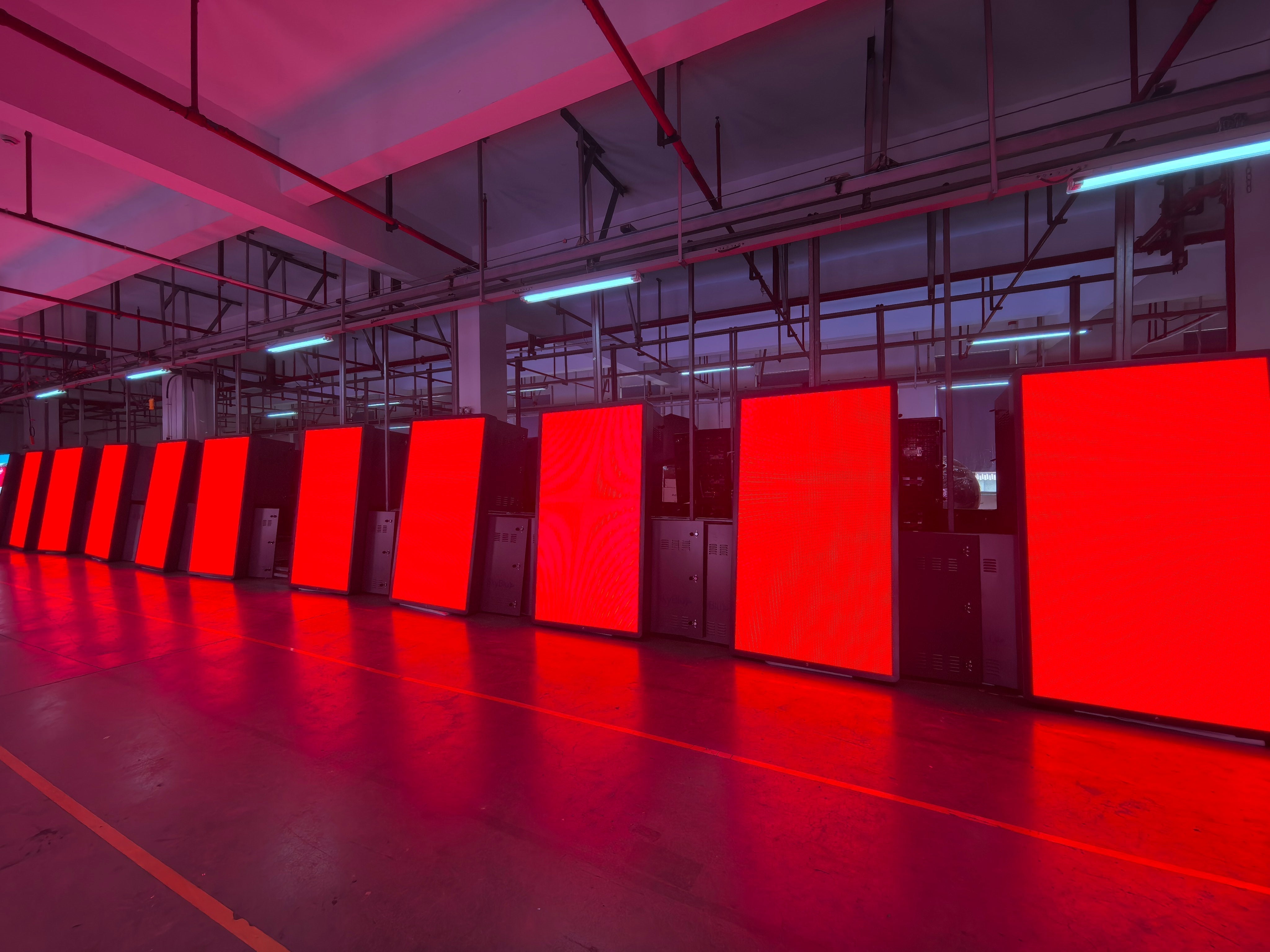
Currently, heavy-duty iron cabinets—manufactured using precision-formed galvanized iron sheet metal or cold-rolled steel alloy sheets—remain the most widely deployed structural framework in the mid-to-low-end outdoor fixed LED market. The primary advantage of the iron cabinet is its exceptional cost-efficiency. It requires low initial manufacturing tooling costs, making it highly competitive for budget-conscious, large-scale billboard installations. Additionally, iron configurations offer robust structural strength, tight mechanical seals against dust, and excellent malleability, allowing engineers to weld and bend custom sizes tailored to unique architectural walls.
However, the engineering drawbacks of iron enclosures are substantial compared to premium alternative alloys:
- ▸Excessive Dead-Weight Deadload: Iron profiles carry an immensely high self-weight. This structural mass drastically increases shipping freight bills and local labor installation risks, while demanding heavily reinforced steel support columns, deep concrete foundations, and expensive load-bearing wall evaluations.
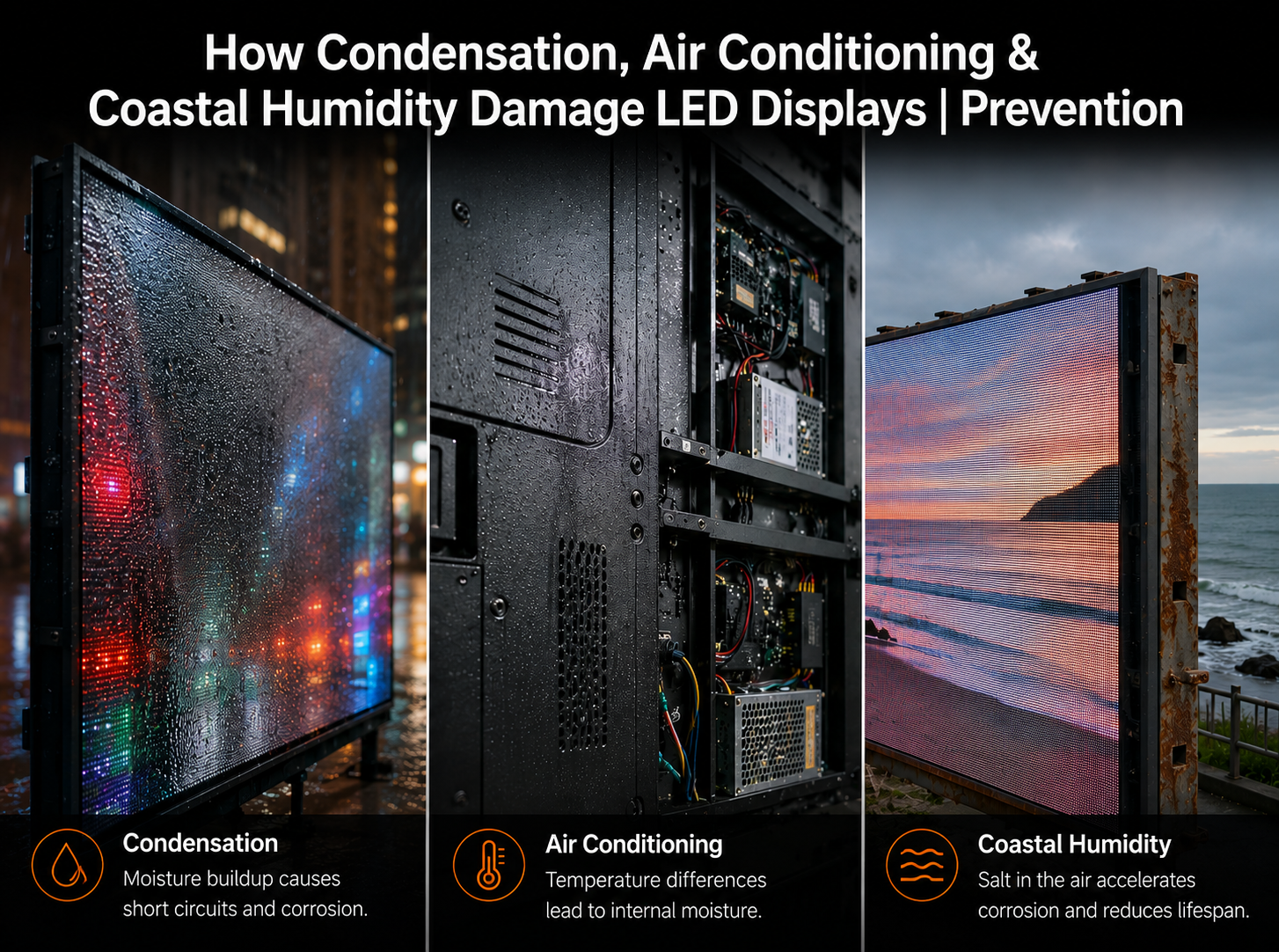
- ▸Susceptibility to Atmospheric Corrosion: Continuous outdoor deployment exposes iron frameworks to rain, coastal salt-spray humidity, and chemical pollution, accelerating oxidation. If anti-rust coatings erode, rust and structural degradation can occur, compromising internal electronics and short-changing the product's expected 100,000-hour lifespan.
- ▸Limited Mechanical Precision: Unlike CNC-machined die-cast aluminum, sheets of iron can warp slightly during heavy welding procedures. This can result in uneven seams and modular alignment deviations across massive screen surfaces, which can disrupt fine-pitch visual consistency.
Based on internal structural geometry, ingress protection metrics, and specific environmental goals, standard commercial LED display enclosures are split into two major classifications:
| Cabinet Type | Key Advantages & Engineering Strengths | Primary Ideal Target Applications |
|---|---|---|
| Standard Fully-Sealed Waterproof Cabinet | Equipped with heavy independent rear access doors, weather-sealed rubber gaskets, and watertight cable glands. Delivers verified IP65 to IP67 protection to survive direct downpours and sandstorms. | Permanent open-air outdoor billboards, highway advertising columns, and unshaded exterior building walls. |
| Simple Open-Frame Cabinet (Simple Frame) | Designed with an open-back configuration or a basic ventilated door sheet. Highly cost-effective and provides exceptional natural convective thermal dissipation, preventing heat buildup. | Semi-outdoor locations, under building eaves, or indoor environments where external structural glass or steel frames seal out rain. |
To address complex architectural spaces and creative retail footprints, the LED industry has developed highly specialized, abnormal cabinet shapes that break standard rectangular limits:
- ▸Front-Opening Maintenance Cabinets: Engineered with internal hydraulic struts or hinged front-flip chassis mechanisms, these cabinets allow modules and power configurations to be fully serviced from the front. This eliminates the need for expensive rear catwalk spaces, making it ideal for zero-clearance wall-integrated projects.
- ▸Double-Sided Advertising Displays: Sharing a unified internal structural skeleton and power core, these cabinets support independent active LED module walls facing opposite directions. They are commonly used on pedestrian shopping walkways and street light poles to double audience ad exposure.
- ▸Curved & Angular Flexible Profiles: Built with non-standard segmented chassis angles, these cabinets assemble smoothly into concave or convex configurations. They are used to wrap around circular corners or support naked-eye 3D creative visuals that demand seamless right-angle transitions.
Need help navigating mechanical cabinet configurations for an upcoming commercial DOOH project? VMX Visual offers certified structural engineering services, flexible configurations, and premium field support to ensure long-term stability.
Q: Why are heavy iron cabinets still a preferred baseline choice for basic B2B billboard projects?
Despite their higher weight profile and risk of long-term oxidation, iron sheets provide a very cost-effective solution for large-scale outdoor installations. For standard, permanent pole-mounted billboards where structure-weight parameters are not restrictive, iron cabinets provide sufficient physical protection, strong structural strength, and solid structural integrity at a low procurement cost.
Q: What steps should engineering teams take to mitigate rust on iron cabinets in humid environments?
To extend the lifespan of an iron frame in coastal or high-humidity regions, the sheet metal must undergo hot-dip galvanization and be coated with multi-layer anti-corrosion automotive paint. Regular preventative maintenance checks should be conducted to patch scratches, inspect structural seals, and ensure internal water-drainage channels remain unblocked.
Standards & Compliance
- International Electrotechnical Commission (IEC 60529) — Standard criteria for defining Ingress Protection (IP) ratings for electronic enclosures and waterproof cabinets.
- American Society for Testing and Materials (ASTM A123) — Standard specifications for zinc/galvanized anti-corrosion coatings applied to structural iron and steel products.


Teilen:
How to Fix LED Screen Glitching & Video Wall Flickering
How to Choose Campus LED Displays: 4 Sourcing Tips for Smart Schools